Easy Peach Freezing – Keep Your Peaches Fresh
Freezing peaches is the absolute best way to capture that sun-ripened sweetness long after the season has passed. Imagin extracte, a year from now, pulling a bag of perfectly preserved peaches from your freezer to whip up a warm, comforting cobbler or a vibrant smoothie. That’s the magic of knowing how to easily freeze peaches! We all adore peaches for their juicy texture and that unmistakable sweet-tart flavor that screams summer. But the real beauty of freezing peaches lies in its simplicity and the incredible versatility it unlocks. You’re not just preserving fruit; you’re locking in sunshine, ready to be savored at your leisure. No more saying goodbye to those fleeting moments of peak peach perfection. With these straightforward methods, you’ll be a pro at freezing peaches in no time.
How to Easily Freeze Peaches
There’s nothing quite like the taste of fresh, ripe peaches. But what happens when you have an abundance of this delicious fruit and want to enjoy it long after peach season has passed? Freezing is your answer! It’s a surprisingly simple process that preserves the vibrant flavor and texture of your peaches, making them perfect for smoothies, pies, cobblers, and more, all year round. I’ve found that with a few key ingredients and a little bit of time, you can easily capture that summer sweetness. Let’s dive into how we can get your peaches ready for the freezer.
Ingredients:
Preparing Your Peaches for Freezing
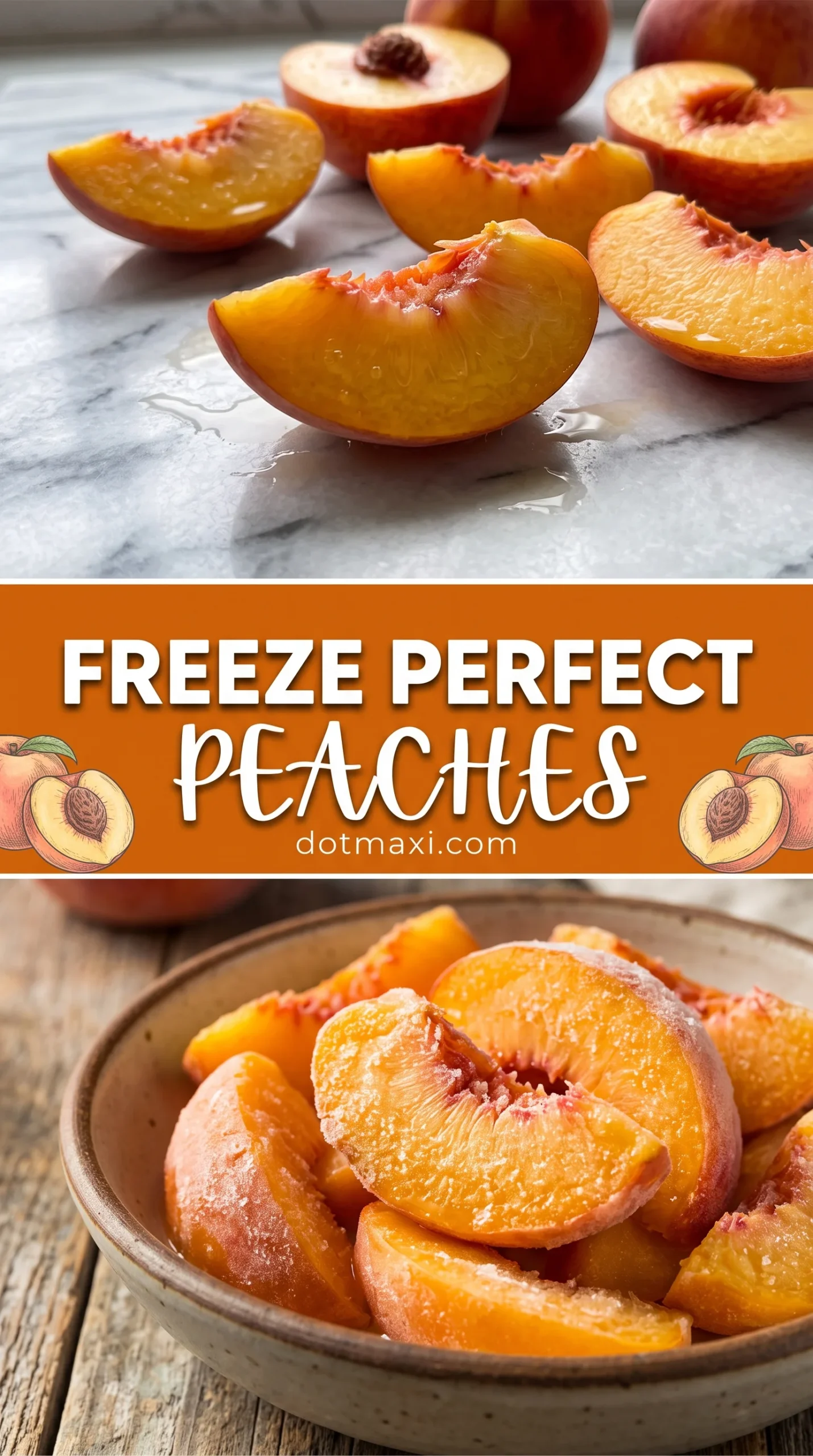
The first step in freezing peaches is to get them prepped. This involves washing them thoroughly, peeling them (if you prefer), pitting them, and then slicing them into manageable pieces. Ripe but still firm peaches are ideal for freezing, as they’ll hold their shape better. If your peaches are a bit too soft, they can still be frozen, but they might become mushier when thawed.
To start, I like to wash the peaches under cool running water. Gently rub the skins to remove any dirt or residue. For the peeling, you have a couple of options. You can use a paring knife to carefully peel them, or for a quicker method, you can blanch them. To blanch, I’ll make a small ‘X’ at the bottom of each peach with a knife. Then, I’ll drop them into boiling water for about 30-60 seconds, until the skins start to loosen. Immediately transfer them to an ice bath to stop the cooking process. The skins should then slip off very easily. This blanching method makes peeling a breeze!
Once peeled, you’ll want to cut the peaches in half and remove the pit. A small spoon or a paring knife can help you scoop out the pit. Then, slice the peach halves into wedges or slices, depending on how you plan to use them later. Uniformly sized pieces will freeze more evenly. I usually aim for about ½-inch thick slices, as they’re versatile for most recipes. As you slice them, place the peach pieces into a large bowl.
Protecting Your Peaches
This is where the Fruit Protector comes in, and it’s a crucial step for preventing browning and preserving that beautiful peachy color. Fruit Protector is essentially ascorbic acid (vitamin C), which is a natural antioxidant. It prevents the peaches from oxidizing and turning an unappetizing brown color once they’re exposed to air. I usually mix the Fruit Protector with a little bit of cold water according to the package directions, but for this recipe, we’re going to incorporate it with the sugar.
In a separate small bowl, combine the 2/3 cup of sugar with the 3 teaspoons of Fruit Protector. Stir this mixture well to ensure the Fruit Protector is evenly distributed throughout the sugar. This sugar and Fruit Protector mixture will be tossed with the sliced peaches.
Sweetening and Preserving
Now, it’s time to toss our sliced peaches with the sugar and Fruit Protector mixture. Gently add the sugar-Fruit Protector blend to the bowl of sliced peaches. Using a large spoon or even your clean hands, carefully toss the peaches until each slice is lightly coated. You want to ensure an even distribution of the sugar and the Fruit Protector. The sugar not only adds a touch of sweetness but also helps to draw out some of the moisture from the peaches, which aids in the freezing process and contributes to a better texture upon thawing. Don’t be alarmed if the peaches start to release a bit of juice; this is perfectly normal. This liquid, combined with the sugar and Fruit Protector, will form a light syrup that further protects and flavors the peaches.
Packagin extractg for the Freezer
Once your peaches are coated, it’s time to package them for long-term storage. The key to successful freezing is to prevent as much air contact as possible. I like to use freezer-safe bags or airtight containers. If you’re using freezer bags, you can work in batches, filling each bag with a portion of the peach slices and the juice that has accumulated in the bowl. Try to remove as much air as possible from the bags before sealing them. You can do this by laying the bag flat on your counter and gently pressing the air out towards the opening as you seal it. Alternatively, you can use a straw to suck out the air before zipping it closed.
If you’re using freezer-safe containers, fill them with the peach slices and syrup, leaving a little headspace at the top. This is because liquids expand when frozen. Make sure the lids are senon-alcoholic aled tightly. For optimal freshness, I recommend using the peaches within 8-12 months. Labeling your packages with the date you froze them is a good practice so you can keep track of how long they’ve been in the freezer.
The Freezing Process
Once your peaches are packaged, it’s time to place them in the freezer. It’s a good idea to place the packages on a flat surface in your freezer to prevent them from shifting or toppling over while they freeze. This also helps them freeze more quickly and evenly. Within a few hours, your peaches will be solid. You can then rearrange them in your freezer to make space for other items. Enjoy the satisfaction of knowing you’ve preserved the taste of summer for countless delicious meals to come!
Conclusion:
You’ve now got the essential knowledge to master the art of freezing peaches! This method is truly a game-changer, allowing you to savor the sweet, sun-ripened flavor of summer peaches all year round. Whether you’re craving a taste of a warm August afternoon in the dead of winter or want to add vibrant sweetness to your baked goods and smoothies, freezing peaches ensures you’ll never miss out on their deliciousness. Imagin extracte whipping up a comforting peach cobbler in December or enjoying a refreshing peach smoothie on a snowy morning – it’s all possible with this simple freezing technique.
The beauty of frozen peaches extends beyond their convenience. They retain their fantastic flavor and texture, making them incredibly versatile. Enjoy them straight from the freezer for a healthy frozen treat, blend them into smoothies for an extra burst of fruity goodness, or use them in pies, crum extractbles, and jams. For variations, consider adding a touch of lemon juice or a sprinkle of sugar before freezing to further enhance their flavor and prevent browning.
I truly encourage you to give this a try! It’s a rewarding way to preserve peak-season produce and will undoubtedly become a staple in your kitchen. Don’t let your beautiful harvest go to waste – embrace the ease of freezing peaches and enjoy their delightful taste whenever the craving strikes.
Frequently Asked Questions:
Can I freeze whole peaches?
While it’s possible, freezing whole peaches is not recommended. The texture will suffer significantly upon thawing, and the large pit can affect the freezing process. Slicing or pureeing them beforehand leads to a much better final product and easier use in recipes.
Do I need to peel peaches before freezing?
It’s highly recommended to peel your peaches before freezing. The fuzzy skin can become unpleasant and difficult to digest after freezing. Peeling also makes them easier to prepare for smoothies and other recipes once thawed.
How long do frozen peaches last?
When properly frozen using airtight packagin extractg, your peaches can maintain excellent quality for approximately 8-12 months. For best flavor and texture, it’s ideal to consume them within the first year.
Freezing Peaches, How to Easily Freeze Peaches
A simple guide to preserving fresh peaches by freezing them for later use, ensuring their delicious flavor and texture are maintained.
Ingredients
-
{‘@type’: ‘Ingredient’, ‘name’: ‘Peaches’, ‘quantity’: ‘1 quart’}
-
{‘@type’: ‘Ingredient’, ‘name’: ‘Sugar’, ‘quantity’: ‘2/3 cup’, ‘description’: ‘For a sweet syrup or dry pack’}
-
{‘@type’: ‘Ingredient’, ‘name’: ‘Fruit Protector’, ‘quantity’: ‘3 teaspoons’, ‘description’: ‘To prevent browning’}
-
{‘@type’: ‘Ingredient’, ‘name’: ‘Water’, ‘quantity’: ‘4 cups’, ‘description’: ‘For syrup pack, optional’}
-
{‘@type’: ‘Ingredient’, ‘name’: ‘Lemon Juice’, ‘quantity’: ‘1 tablespoon’, ‘description’: ‘Optional, for extra browning prevention’}
Instructions
-
Step 1
Wash and peel the peaches. Cut them in half, remove the pits, and slice or dice as desired. -
Step 2
Prepare your peaches for freezing. You can choose a dry pack, syrup pack, or sugar pack method. -
Step 3
For a syrup pack: In a saucepan, combine 4 cups of water and 2/3 cup of sugar. Heat until sugar dissolves. Let cool completely. Add 3 teaspoons of Fruit Protector and 1 tablespoon of lemon juice (if using) to the cooled syrup. -
Step 4
For a sugar pack: Toss sliced peaches with 2/3 cup of sugar and 3 teaspoons of Fruit Protector until evenly coated. -
Step 5
Pack the prepared peaches into freezer-safe bags or containers, leaving about 1/2 inch headspace. If using syrup, pour it over the peaches, ensuring they are fully submerged. -
Step 6
Remove as much air as possible from the bags before sealing. Label the containers with the date and contents. -
Step 7
Freeze for up to 10-12 months.
Important Information
Nutrition Facts (Per Serving)
It is important to consider this information as approximate and not to use it as definitive health advice.
Allergy Information
Please check ingredients for potential allergens and consult a health professional if in doubt.