Spicy Tuna Kimbap Easy Minute Recipe
Easy 15-min. Spicy Tuna Kimbap is your new weeknight hero! Are you craving something delicious, satisfying, and lightning-fast to prepare? Look no further. This vibrant Korean rice roll is a crowd-pleaser for so many reasons. It’s a perfect balance of savory, slightly sweet rice, crunchy vegetables, and that irresistible kick of spicy tuna. What makes this Easy 15-min. Spicy Tuna Kimbap truly special is its incredible versatility and speed. Gone are the days of spending hours in the kitchen; we’re talking about a flavor-packed meal that can be on your table in the time it takes to stream your favorite short episode. Whether you’re packing lunches, need a quick dinner, or just want a fun snack, this recipe delivers big on taste without the fuss. Get ready to revolutionize your meal prep!
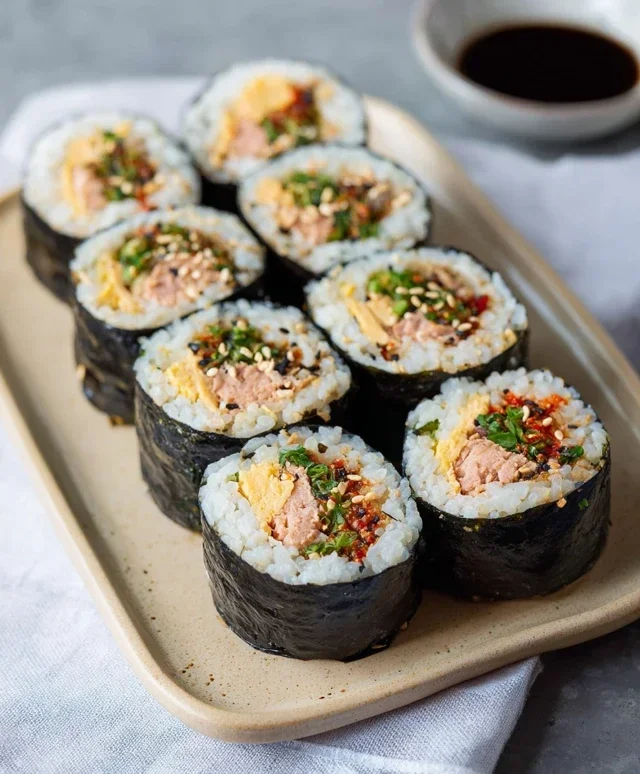
Easy 15-Min. Spicy Tuna Kimbap
Craving something delicious, satisfying, and quick? Look no further! This 15-minute Spicy Tuna Kimbap is your new best friend for a speedy and flavorful meal or snack. Kimbap, often described as Korean sushi rolls, is incredibly versatile, and this spicy tuna version is a modern twist that’s incredibly addictive. It’s perfect for busy weeknights, a quick lunch, or even an impressive appetizer for guests. The beauty of kimbap is its simplicity and the fact that you can customize it endlessly. Today, we’re focusing on a streamlined, intensely flavorful spicy tuna filling that comes together in a flash. Let’s get rolling!
Ingredients:
Cooking Instructions:
Let’s get started on this lightning-fast culinary adventure! The key to this 15-minute recipe is having your rice cooked beforehand. If you don’t have leftover rice, I highly recommend using minute rice or preparing your short-grain rice a bit ahead of time.
1. Prepare the Rice Base
First things first, we need to season our hot, cooked short-grain rice. This is crucial for flavor and texture. In a medium-sized bowl, combine the 2 cups of hot cooked short-grain rice with 1 teaspoon of sesame oil, 1 teaspoon of sesame seeds, and 1 teaspoon of salt. Gently mix everything together with a spoon or rice paddle, being careful not to mash the rice grains too much. You want them to remain distinct yet coated in the delicious seasoning. The heat from the rice will help the sesame oil and salt distribute evenly, infusing each grain with flavor. Set this aside while you prepare the filling.
2. Craft the Spicy Tuna Filling
Now for the star of the show – the spicy tuna filling! Open your canned tuna and drain it thoroughly. If you’re using tuna packed in oil, you might want to press out as much of the oil as possible. Transfer the drained tuna to a small bowl. Add the 2 tablespoons of finely chopped green onion, 2 tablespoons of Japanese mayonnaise (which lends a wonderfully creamy and slightly tangy flavor, but regular mayo will work in a pinch), and 1 to 2 tablespoons of sriracha. Start with 1 tablespoon of sriracha and taste, then add more if you desire a spicier kick. Mix everything together until it’s well combined and the tuna is flaked into bite-sized pieces. This mixture should be moist and creamy, with a vibrant spicy aroma.
3. Assemble the Kimbap Rolls
This is where the magic happens! Lay one sheet of nori, shiny side down, on a clean, dry surface or a bamboo rolling mat if you have one. If you don’t have a bamboo mat, don’t worry, your hands will do just fine! Spread about half of the seasoned rice evenly over the nori sheet, leaving about a 1-inch border clear at the top edge (the edge furthest from you). This border will help seal the roll. Now, arrange 2 perilla leaves on top of the rice, covering roughly two-thirds of the rice area. The perilla leaves add a unique, slightly peppery and aromatic flavor that complements the spicy tuna beautifully. If you don’t have perilla leaves, washed and dried green leaf lettuce leaves are a good substitute.
4. Add the Spicy Tuna and Roll
Spoon half of the prepared spicy tuna mixture in a line down the center of the perilla leaves. Now, it’s time to roll! Starting from the edge closest to you, carefully lift the nori and rice, using your fingers to tuck the filling in as you begin extract to roll. Roll it up tightly, pressing gently as you go. Use the clear nori border at the top to seal the roll. If it doesn’t stick right away, you can dab a tiny bit of water on the edge to help it adhere. Repeat this process with the remaining ingredients to create your second kimbap roll.
5. Finish and Serve
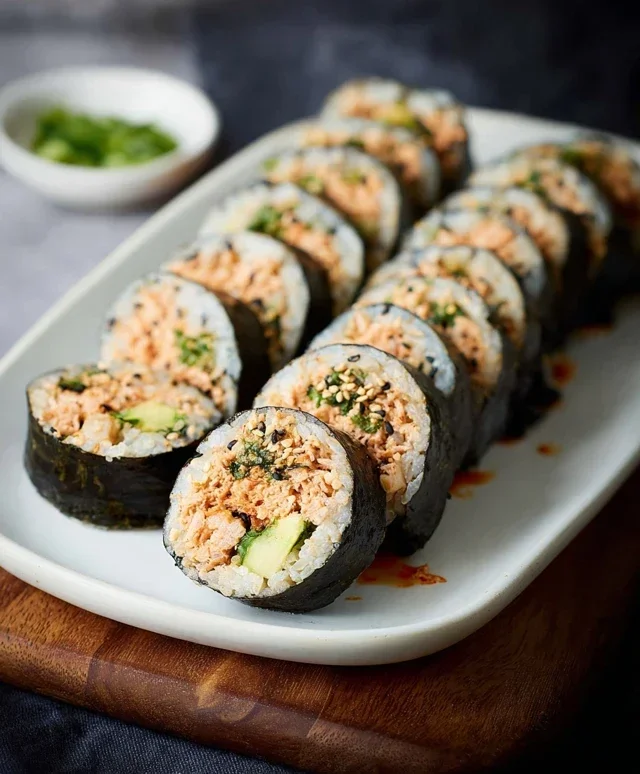
Once your kimbap rolls are complete, it’s time for the final touches! Place the two rolled kimbap logs on a clean cutting board. Lightly brush the outside of each roll with the remaining 1/2 teaspoon of sesame oil. This adds a beautiful sheen and an extra layer of nutty aroma. Sprinkle the top of each roll with the remaining 1/2 teaspoon of sesame seeds. Now, using a sharp knife, slice each roll into 6-8 bite-sized pieces. It helps to wipe your knife with a damp cloth between cuts to ensure clean slices. And there you have it – your delicious, homemade 15-minute Spicy Tuna Kimbap is ready to be enjoyed! Serve immediately as is, or with a side of soy sauce for dipping if you like. Enjoy this quick and tasty creation!
Conclusion:
And there you have it! Our Easy 15-min. Spicy Tuna Kimbap is a true weeknight wonder, perfect for those moments when hunger strikes but time is short. The beauty of this recipe lies in its incredible speed and vibrant flavors. The combination of spicy, savory tuna, crisp vegetables, and fragrant rice, all neatly rolled in seaweed, creates a satisfying and delicious meal that feels both healthy and indulgent. It’s so versatile and surprisingly simple to master, making it an ideal option for begin extractner cooks or anyone looking for a quick yet impressive dish.
I love serving this kimbap alongside a light soy-gin extractger dipping sauce or even just on its own as a complete meal. It’s also fantastic packed for lunches or picnics! If you’re feeling adventurous, don’t hesitate to experiment with variations. Consider adding other cooked proteins like shredded chicken or even some firm tofu for a vegetarian twist. Feel free to swap out the vegetables for whatever you have on hand – finely chopped carrots, blanched spinach, or pickled radishes are all excellent choices. The possibilities are endless!
I truly hope you give this Easy 15-min. Spicy Tuna Kimbap a try. It’s a recipe that’s guaranteed to become a staple in your busy household. Let me know what you think when you make it!
Frequently Asked Questions:
Can I make the spicy tuna filling ahead of time?
Absolutely! You can prepare the spicy tuna mixture up to a day in advance and store it in an airtight container in the refrigerator. This will save you even more time when you’re ready to assemble your kimbap.
What kind of rice is best for kimbap?
Short-grain or medium-grain sushi rice is ideal for kimbap. It has a slightly sticky texture that holds its shape well when rolled. Make sure to cook and season it according to your preference with rice vinegar, sugar, and salt for that classic kimbap flavor.
Easy 15-min. Spicy Tuna Kimbap
Quick and flavorful spicy tuna kimbap, perfect for a fast lunch or snack.
Ingredients
-
2 sheets nori (or gim (dry roasted seaweed))
-
4 perilla leaves (washed & dried with stems trimmed (or sub with green leaf lettuce))
-
1/2 tsp sesame oil (to season kimbap)
-
1/2 tsp sesame seeds (to garnish kimbap)
-
2 cups cooked short grain rice (hot)
-
1 tsp sesame oil
-
1 tsp sesame seeds
-
1 tsp salt
-
5.3 oz canned tuna in oil (or canned tuna in water)
-
2 tbsp green onion (very finely chopped)
-
2 tbsp Japanese mayo (aka Kewpie mayo (or regular mayo))
-
1-2 tbsp sriracha (depending on your spice tolerance (or sub with gochujang))
Instructions
-
Step 1
In a bowl, flake the canned tuna and mix with chopped green onion, Japanese mayo, and sriracha. Adjust sriracha to your spice preference. -
Step 2
Season the hot cooked rice with 1 tsp sesame oil, 1 tsp sesame seeds, and 1 tsp salt. Mix well. -
Step 3
Place a sheet of nori shiny-side down on a bamboo rolling mat or parchment paper. Wet your hands slightly and spread a thin, even layer of seasoned rice over the nori, leaving about an inch of space at the top. -
Step 4
Arrange two perilla leaves (or lettuce) on top of the rice. Spoon the spicy tuna mixture lengthwise over the perilla leaves. -
Step 5
Tightly roll the kimbap using the bamboo mat, starting from the bottom edge and tucking in the filling. Seal the edge with a little water if needed. -
Step 6
Repeat with the remaining ingredients. Brush the outside of the rolls with a little sesame oil and sprinkle with sesame seeds. -
Step 7
Slice the kimbap into bite-sized pieces using a sharp knife. Serve immediately.
Important Information
Nutrition Facts (Per Serving)
It is important to consider this information as approximate and not to use it as definitive health advice.
Allergy Information
Please check ingredients for potential allergens and consult a health professional if in doubt.